
Why Spiritual Truth Sounds Cruel
[Part 2] Warren Zevon’s “My Shit’s Fucked Up” begins with a brutal diagnosis: that suffering reveals the lies we tell ourselves about what will fully satisfy.
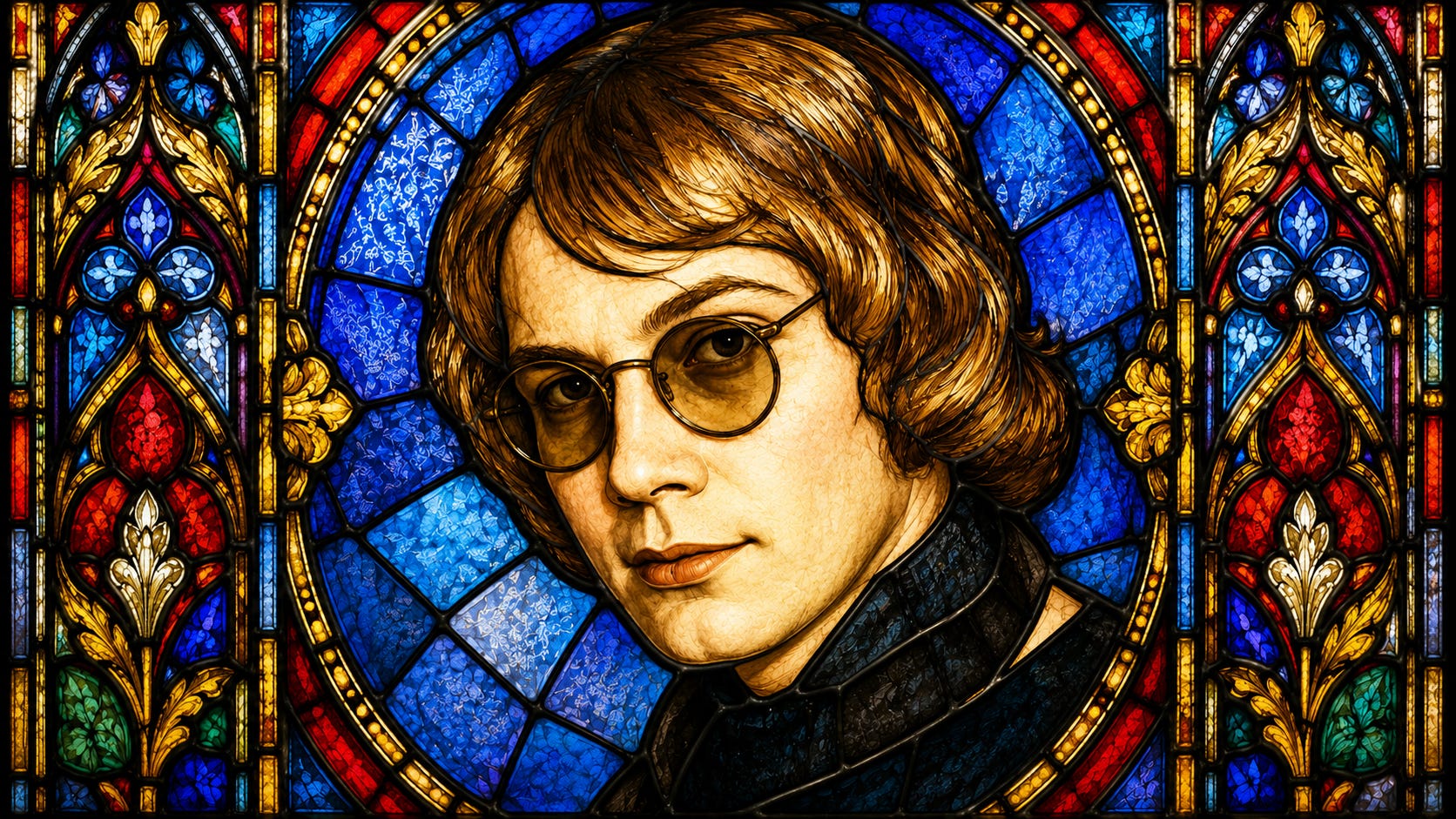
This is part two of an eight-part series on Warren Zevon’s “My Shit’s Fucked Up.”
Read the previous post and listen to the song. New to Spirituality of Rock? Learn about this project.
“Well, I went to the doctor, I said, ‘I’m feeling kinda rough.’ He said, ‘Let me break it to you son, your shit’s fucked up.’”
— Warren Zevon
Here’s an old joke: What do you call a medical student who graduates at the bottom of his class?
Doctor.
(I hope you don’t have an appointment with that guy tomorrow.)
Still, what makes a good doctor? Two things: He gives you an accurate diagnosis and gives it to you straight.
We need doctors like that. Bedside manner aside, a good doctor’s goal is to make you better. Not telling you the truth, even when it’s painful, won’t get you there.
The same is true of our spiritual health. The attending physician, speaking through our conscience, knows the trouble and offers the diagnosis.
Our hero in Warren Zevon’s “My Shit’s Fucked Up” begins with a trip to the doctor because he isn’t feeling great (about the song →). And who is this physician? He’s not, as we see from time to time in rock, a drug dealer like Mötley Crüe’s Dr. Feelgood. No, this doctor knows illness, and he sees it in our hero.
People often identify with this song because they are sick or have suffered life-changing misfortune. The lyrics certainly fit.
I think spiritual crisis fits better. If so, the “doctor” is a spiritual physician, which fits the Catholic motif of Christ the Physician of bodies and souls1.
What does it mean to be spiritually healthy?
Spiritual health means sharing in God’s life through knowledge and love2. The result: You fully become the person God made you to be. God wants that for you. It’s why you were created.
Spiritual illness is the opposite of that. It comes when we settle for less, pursuing created things as if they could make us whole. We get attached to them and give them power over our hearts. St. Augustine, a foundational theologian of the Catholic Church who suffered through his own spiritual crisis, might call this love out of order. And if love is out of order, we are not sharing fully in God’s life. In fact, we’re missing something necessary for our own. We’re less free, our nature is incomplete, and we feel “kinda rough.” (Liner note: Did St. Augustine Rock? →)
Where do we meet this spiritual doctor? When we visit our primary doctor for a check-up, we end up in one of those small exam rooms. In this spiritual sense, the exam room is our conscience.
Our conscience is an intimate place where we meet God. “Conscience is the most secret core and sanctuary of a man,” taught St. Paul VI3. “There he is alone with God, whose voice echoes in his depths.”
Now, I’m never happy in the doctor’s little exam room. The waiting drives me nuts. I probably blew the blood pressure check given by the nurse, proving I suffer from White Coat Syndrome. To ease the waiting, I get on my phone to check email, which makes my blood pressure worse. Then I feel guilty when the doctor knock-enters the room and my blood pressure goes up again. All this before I get examined.
But conscience is different. It may be the little exam room where we are alone with Christ the Physician, but there’s no wait (and nothing to fear).
And this is where our hero stands — in front of God within his conscience. Something’s wrong, so he asks for help by describing his symptoms. He gets a diagnosis immediately.
And it’s disturbingly direct. Why? In love, God is kind, but not necessarily nice. Certainly Jesus was not being nice when he said, “I have come to set a man against his father, a daughter against her mother, and a daughter-in-law against her mother-in-law4.” But he was being loving, making an appeal to conversion and warning of its consequences. The message, though difficult, is meant to be truthful, not cruel. The Gospel doesn’t hide the cost of love.
So it is with the “doctor” whose direct truth-telling diagnosis has a single goal: to heal the patient. Our hero’s problem is not a bad mood. There’s something about the way he lives that is throwing his life into disorder. The doctor tells him why: “Your shit’s fucked up.”
His bluntness is an act of love, not cruelty; it’s medicinal, not punitive. When God reveals the truth of our situation to us, what he reveals can be painful, especially when it reflects our own choices and behavior.
Consider the Judgment of the Nations5 in Matthew’s Gospel. When we hear that story, we wonder: am I a sheep or a goat? After a little thought, you might say, “I’m more goaty than sheepy.” (And OMG, you do not want to be a goat.)
But what was Jesus’s aim — to tell you how screwed you really are? No, not at all. He’s showing you the path to healing before it’s too late. He’s saying: I want you to be counted among my sheep. Serve me by serving my people in kindness, love and mercy. That’s how sinners become saints.
It’s a loving message, and not always easy to accept.
Does our hero accept it? In the next post, he reacts — and the consequences begin.
In part three of The Spirituality of Warren Zevon’s “My Shit’s Fucked Up”: “When What Worked Stops Working.”
Tagged: Warren Zevon | My Shit’s Fucked Up | Song Projects
Catechism of the Catholic Church 1509
CCC 356
Gaudium et Spes 16
Mt. 10:35
Mt. 25:31-46